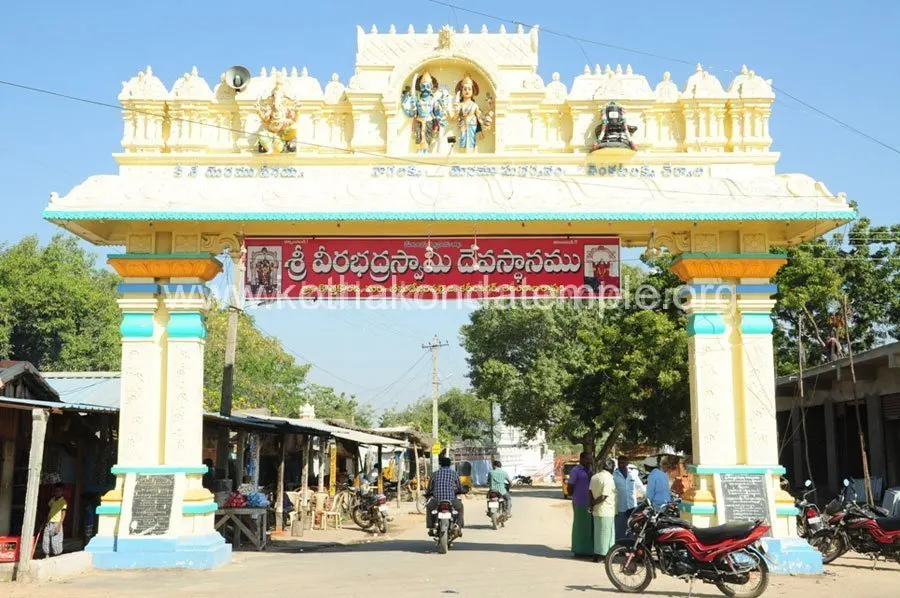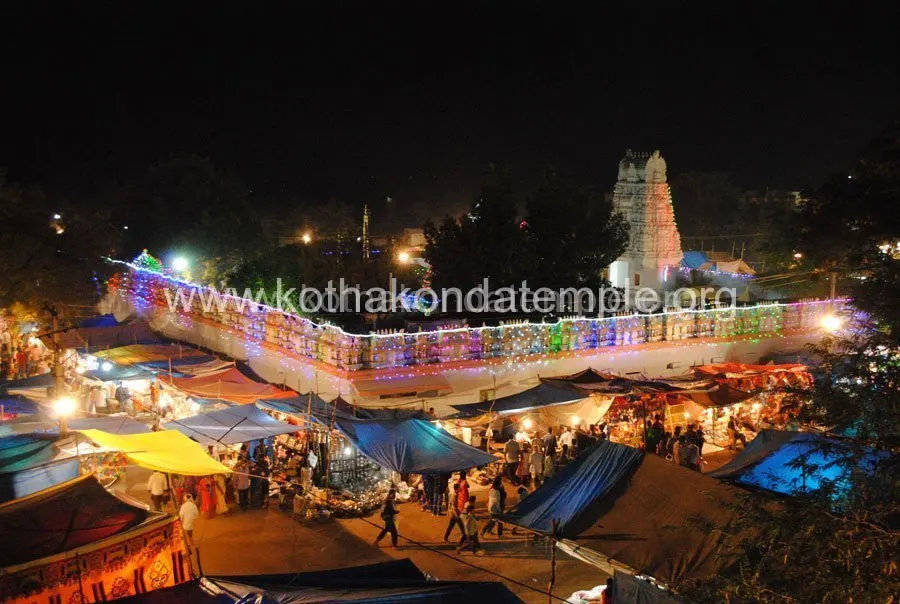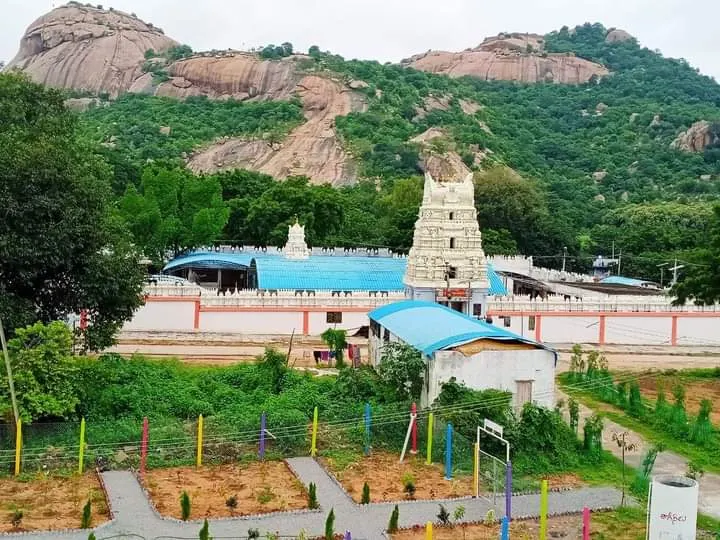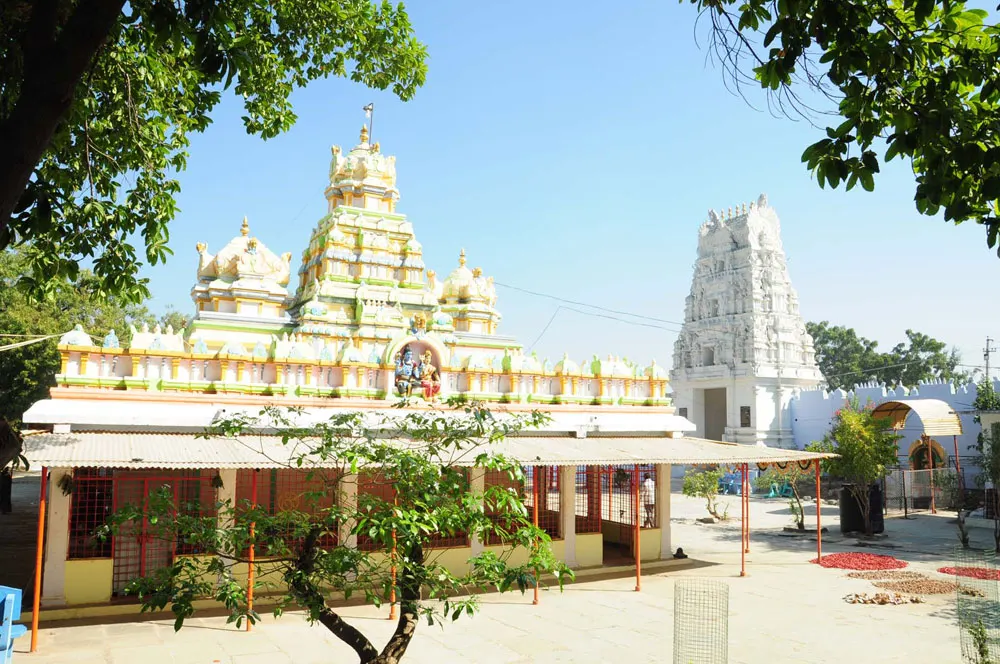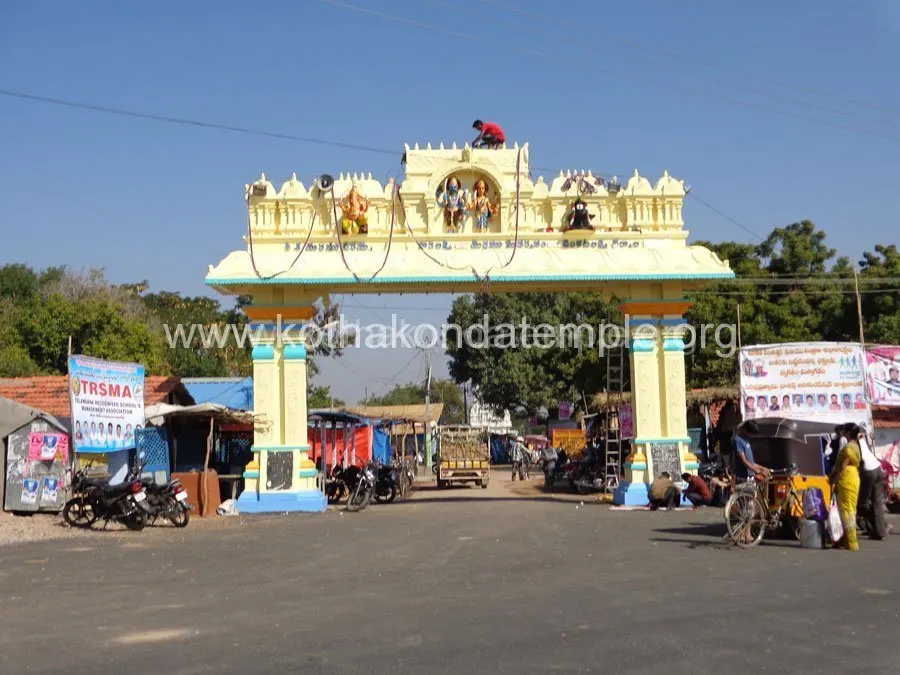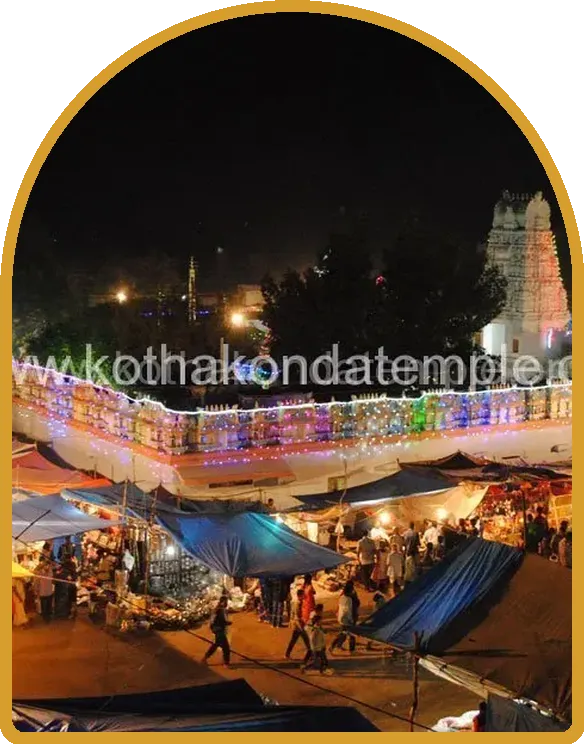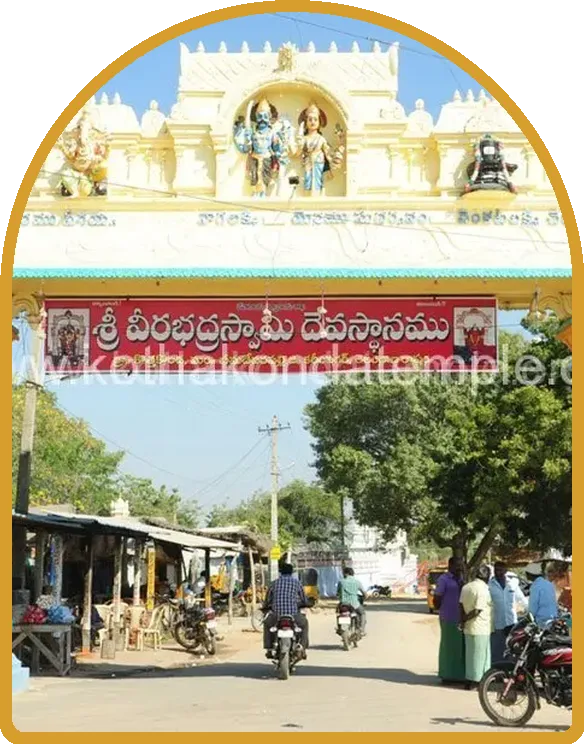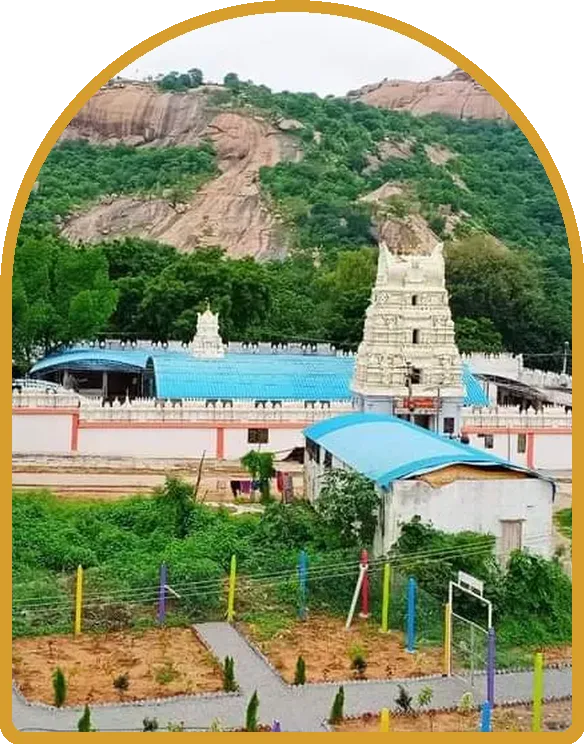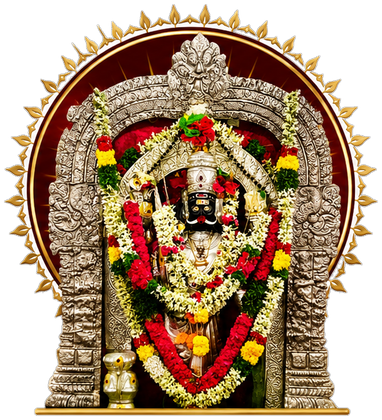
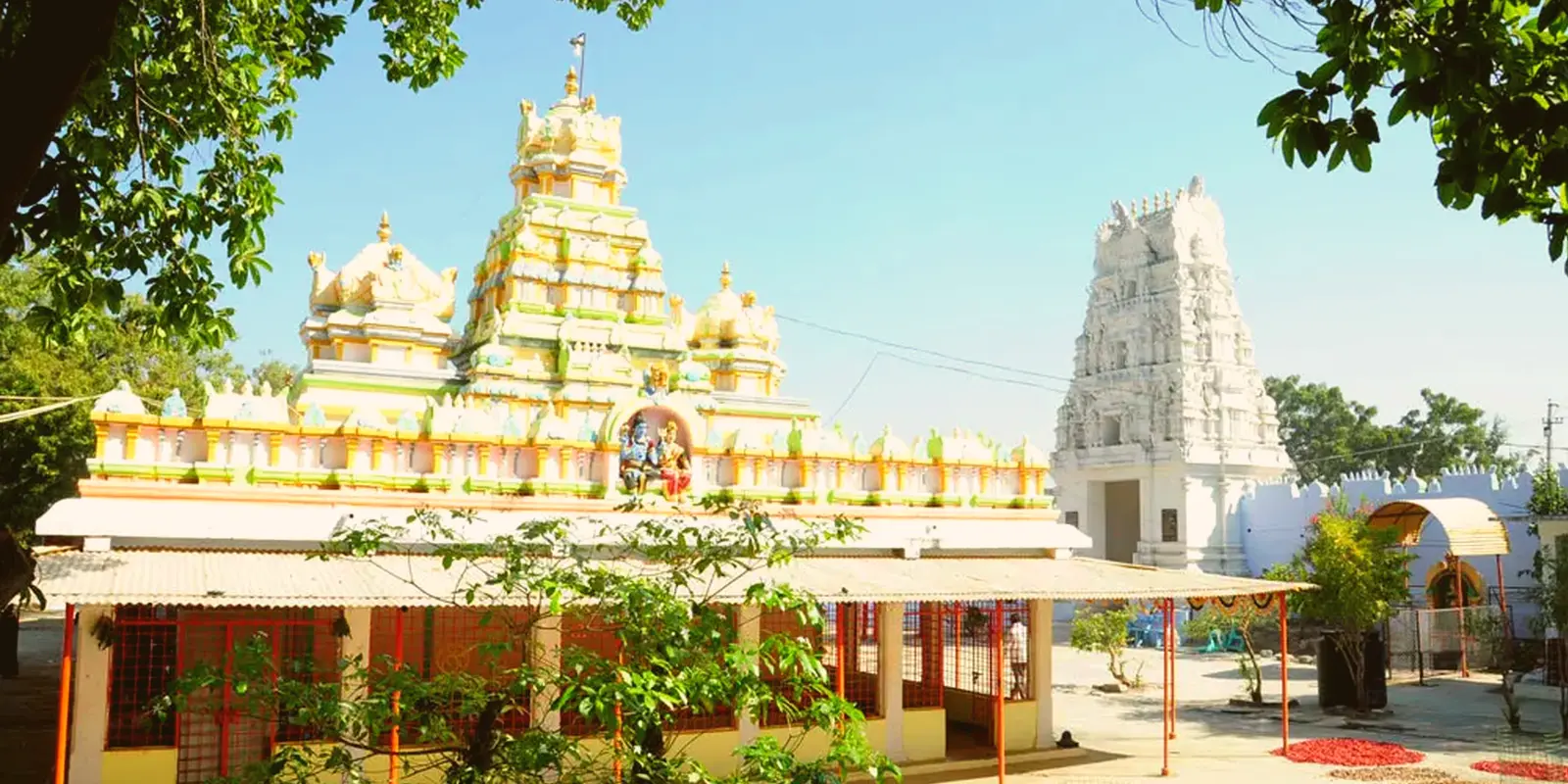
Virabhadra (Sanskrit Vīrabhadra, “auspicious hero”), also spelt Veerabhadra, is a fierce form of Lord Shiva. At Kothakonda he is worshipped as Kora-Meesala Veerabhadra Swamy – the Lord with a moustache – with Kethamma and Medalamma on either side.
The Legend
The Puranas narrate that Daksha Prajapati held a great yajna and did not invite his son-in-law Shiva. When Sati, Daksha’s youngest daughter, came and was insulted, she immolated herself in the sacrificial fire. Grief-stricken and enraged, Shiva tore a lock of his matted hair and dashed it on the ground. From it arose Virabhadra and Bhadrakali.
Shiva commanded Virabhadra to destroy the sacrifice. The assembled gods fled, and Daksha was punished. Shiva then calmed down, restored Daksha to life with the head of a goat, and the yajna was completed with Vishnu as chief priest. Different Puranas tell the story with variations – the Kurma Purana, for example, has Virabhadra realise that Vishnu and Shiva are one.
Significance
- Affiliation: Shiva; abode Mount Kailash; consort Bhadrakali
- Sacred day: Tuesday; associated planet Angaraka (Mars)
- Mantra: Om Vīrabhadrāya Namaḥ
- Weapons in iconography include the trident, sword, bow and arrow, club, axe and shield
- Virabhadra is the ancestral deity (gotrapurusha) of many families and Veerashaiva communities
Worship at Kothakonda
Devotees come to Kothakonda for protection, strength, health and family well-being. See Daily Pujas and Temple Timings. Source for legend and iconography: Wikipedia, “Virabhadra”.
Om Sri Veerabhadraya Namaha
Names, Forms and Mantras
Veerabhadra is also known as Virabhadreshvara, Virarudra and Virashiva. He is shown with many weapons – among them the trident, sword, bow and arrow, discus, conch, spear, mace, axe and shields – and rides a horse or the bull Nandi. His consort is Bhadrakali. Popular mantras include Om Vīrabhadrāya Namaḥ, Om Vīrarudrāya Namaḥ and Om Śrī Vīrabhadreśvarāya Namaḥ; Maha Shivaratri and the month of Shravana are special for his worship.
Origin of the Story
The seed of the legend is found in the Taittiriya Samhita (2.6.8), where the gods exclude Rudra from a sacrifice and he pierces it; the Shatapatha Brahmana and Gopatha Brahmana retell it. In later Puranic literature it is Daksha Prajapati who excludes Shiva.
The Story of Sati
Sati, Daksha’s youngest daughter, devoted herself to Shiva. At her svayamvara Daksha invited every deity except Shiva; Sati threw her garland into the air asking Shiva to accept it, and he appeared in the hall wearing it. Later Daksha held a great sacrifice without inviting the couple. Sati went on her own, was humiliated before the gathering and gave up her life in the sacrificial fire. Shiva then created Virabhadra and Bhadrakali from a lock of his matted hair.
Versions in the Puranas
- Skanda Purana: Virabhadra leads Shiva’s hosts; Indra and the gods are overwhelmed; Vishnu defends the sacrifice, and the battle ends when Shiva arrives and restores Daksha to life with the head of an animal.
- Padma Purana: Virabhadra is born from Shiva’s sweat and is later calmed and made the planet Angaraka (Mars).
- Kurma Purana: Virabhadra realises that Vishnu and Shiva are one.
- Harivamsha and Vamana Purana: Vishnu gets the upper hand in the contest.
Famous Virabhadra Temples
Besides Kothakonda, well-known Virabhadra temples include the Lepakshi temple in Andhra Pradesh (built about 1530–1540 by the Vijayanagara governors Virupanna Nayaka and Viranna), the Bayalu Veerabhadra shrine at Srisailam, Pattiseema, Yadur in Karnataka and Vadhav in Maharashtra.
Source: Wikipedia, “Virabhadra” (summarised).